Part II — How meridian imbalance affects the brain: Japanese Yoga insights into organ & mental health
This article was published by Yoga For Good Foundation. Click on the image below to go to the YFG article, or read the full text below.
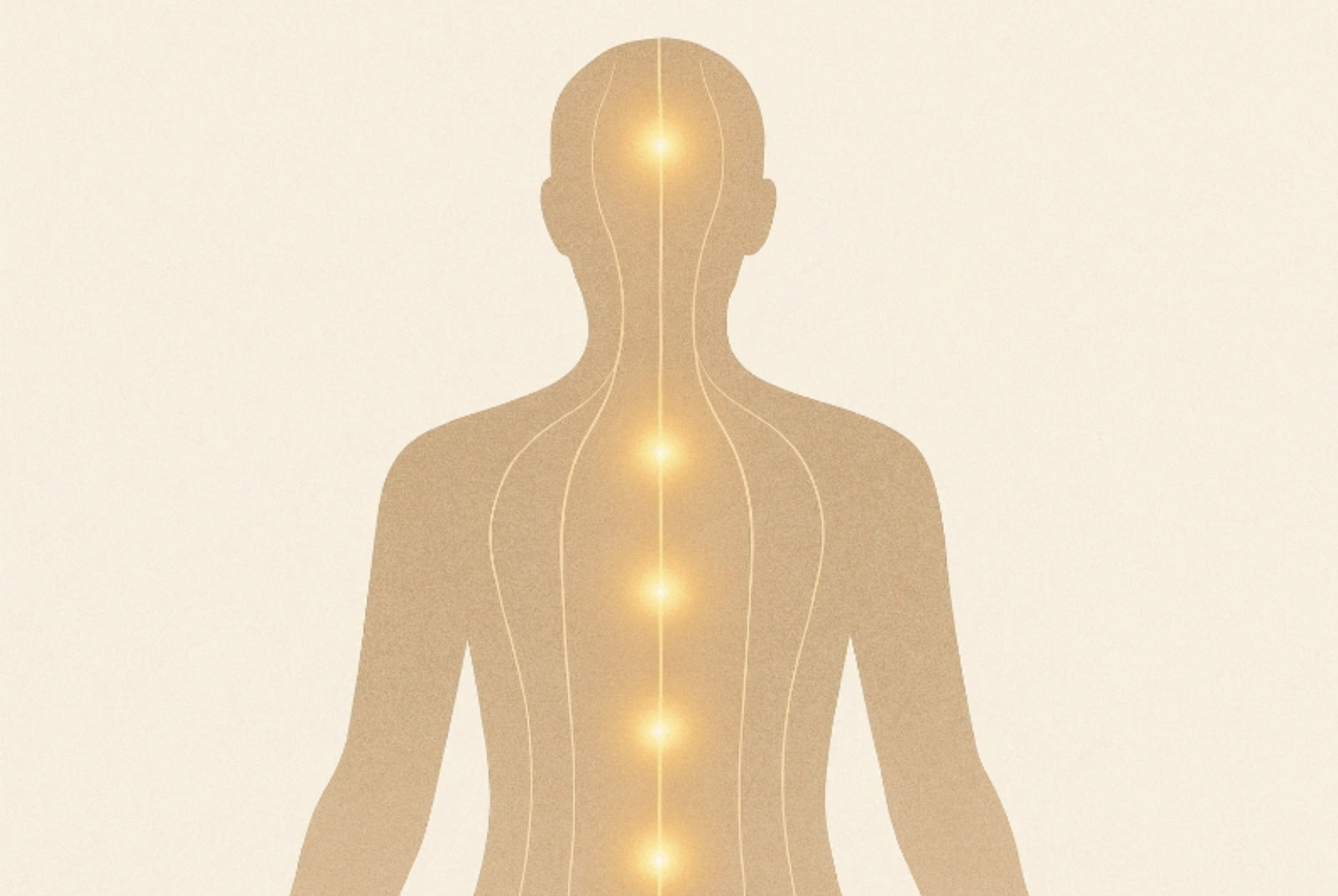
Meridian imbalance can change the tone of the mind as much as the body. It affects clarity, memory and emotional rhythm, often in predictable ways across the five-element framework. These effects become easier to recognise once you understand what each meridian influences.
At Yoga for Good, we enjoy exploring these body–mind links as they can help people make sense of their own experience. In this continuation of my neuroplasticity series, I speak from both my neuroscience background and my work in Japanese Yoga to explore how meridian imbalance shapes brain function.
Meridian imbalance disrupts brain function
Each meridian has a specific effect on the brain’s
function. In fact, issues with specific brain functions
are used as a diagnostic tool in TCM and Japanese
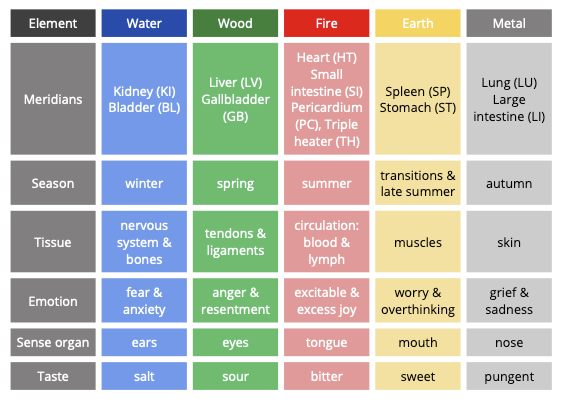
meridian yoga (see Table). If, for example, there is
a foggy brain or indecision, the Large Intestine
meridian is underfunctioning, and the Large
Intestine organ is not absorbing or eliminating
properly. If in excess, there will be judgmental or
stubborn thinking.
The Lung meridian is involved in feelings of
hopelessness if weak (kyo or ‘deficient’) and
overly optimistic if too strong (jitsu or ‘excess’).
Collectively, the Metal element is about being able to let go and make a choice. When it is in balance, the prefrontal cortex is functioning well, so we have clarity, the ability to focus, and clear, decisive executive function. Then, it will help to create a balanced Water element, and so on, through the 5-element creation cycle.
The Water element regulates the nervous system. In other words, the brain, spinal cord and peripheral nerves are most strongly affected by imbalances in the Kidney and Bladder meridians. If the Kidney meridian is imbalanced, the adrenal glands will be overactive or later collapse in adrenal fatigue, and the nervous system will be in sympathetic dominance (fight or flight mode). The limbic (emotional) system in the brain will be overactive, and the prefrontal cortex and hippocampus (involved in memory) will be largely offline, preventing the ability to think clearly, remember things or form new memories.
The vagus nerve becomes inactivated as part of the parasympathetic shutdown that occurs due to sympathetic dominance. Lack of vagal tone will negatively affect digestion via inefficient function in the Wood element (Liver meridian), Fire element (Small intestine meridian) and Earth element (Stomach meridian).
And when digestion is affected, so is everything else, especially the brain. We know this as the gut-brain axis in science. For thousands of years in TCM, digestion has been treated first in the majority of illnesses and conditions, including mental health, and often is the only treatment needed. Japanese meridian yoga continues to use this therapeutic strategy to great effect.
So, from Wood comes dogmatic thinking, from Fire comes ADHD-type hyperactivity in the brain (and body), from Earth comes worry, from Water, anxiety. And so, we have a cyclical effect of imbalance in the elements, causing disrupted networks and negative thoughts and emotions in the brain, which in turn has an unbalancing effect on the organs and meridians.
The meridians control neuroplasticity
Before becoming entirely depressed (a Heart meridian imbalance), there is a monumental upside. Neuroplasticity (which, if you remember, is the ability of the brain to adapt to changes in our environment) is regulated by the meridians and organs. Healthy organs and smooth-flowing energy in the meridians create the right conditions for all the cells in the brain to work together synergistically. This enables the brain to regulate the body to remain healthy automatically, and to produce logical, sensible, reasonable and creative thoughts.
Although all meridians influence the functioning of the brain, those linked directly with the gut and digestion are quintessential for normal brain function. In particular, the small intestine and large intestine (meridians and organs), which contain the gut flora, are pivotal in controlling gut inflammation and the immune system in general. Also, the stomach is the start of digestion and sets up the intestines to do their job well, but it is the organ most affected by stress, anxiety and emotional turmoil.
Finally, there’s one more pair of meridians that are essentially the master regulators of the body, and therefore, the brain. They belong to Phase II of the Fire element. The Pericardium (or Heart protector) regulates the cardiovascular and circulatory systems, facilitating internal communication between the organs and brain (i.e., the whole body).
The Triple Heater meridian (also called Triple burner or San Jiao) is the least understood, partly because it’s not associated with a single physical organ. The Triple heater regulates the lymphatic system and is pivotal in the immune, digestive, thermoregulatory, endocrine and autonomic nervous systems. It regulates energy production and distribution around the body and the strength of the body’s bioelectromagnetic field. In other words, the Triple Heater facilitates the body’s external communication with the world.
In essence, having Triple Heater and Pericardium meridians that are balanced is essential for the organs and whole body (including the brain, of course) to coordinate and work together as a unit, ensuring robust physical health and stable mental health.
Neuroplasticity is in your hands
(not head)
So, that’s all very interesting, but what should we do when everything seems dependent on everything else? If everything that impacts the body impacts the brain, how can we possibly have any control over our mental health and neuroplasticity?
The answer is that we have control over everything. We can and do have agency over the health of our body and brain — it’s in the moment-to-moment choices we make every day in terms of what and how we think, act, eat, sleep, exercise, breathe and poo. Yes, pooing is very important for the health of the whole body, especially for brain function. Remember, brain fog = large intestine dysfunction.
The body is infinitely changeable — we could call this ‘somatoplasticity’. And the brain is infinitely changeable, which, as we know, is neuroplasticity. Somatoplasticity and neuroplasticity are two sides of the same coin, and we need them to be moving in the right direction, towards health, for the whole to work as a unit and maximise our human potential. Luckily, it is the nature of the cosmos, or macrocosm, to tend towards harmony and balance. Therefore, it is the nature of our bodies, or microcosm, to tend towards health, which is simply harmony and balance within the human being.
Whatever we do with our bodies to create balance and harmony will work on the brain (and mind) to create stability, peace, calm and contentment. Of course, this is a direct result of the body experiencing stability, calm energy and so on.
There is an important concept in Japanese meridian yoga that should be obvious by now, and this is that if we want a healthy, calm, stable, high-functioning mind, we must create a healthy body. While meditation alone will get you 80% or 90% of the way towards a stable mind, it will not be sufficient to maintain that state of mental calm and high-level function unless the body is also strong, flexible, symmetrically aligned, and the organs are highly functional.
So, we need a whole-foods diet that suits our constitution, climate and conditions, and ideally, Japanese yoga therapy for each meridian. We need to focus on the seasonally dominant element, unless there is a condition that requires work on a particular meridian, regardless of the season (e.g. Kidney meridian yoga if the nervous system is frayed or there are bone issues such as osteoporosis). Of course, all yoga helps to create balance in the body. And all aspects of our lifestyle need to be addressed, especially the yamas and niyamas. However, in my experience with nearly a dozen different styles and as many diets, nothing seems to fix up the body quite as effectively, efficiently, and permanently as Japanese meridian yoga and its companions, shiatsu, and a macrobiotic diet. But whatever works for you.
Ultimately, to optimise neuroplasticity is to optimise the human condition, which is synonymous with the path of yoga. The goal of yoga, however, reaches way beyond neuroplasticity and yet remains dependent on it.
Connect with your true self through the transformative power of yoga
Seeing how each meridian affects the brain makes it easier to understand why our mental state changes the way it does. When the organs are supported, and the energy moves well, the mind steadies. When they are strained, the mind reacts. It’s important to know that we have more influence than we think.
By Dr Adele Vincent